
The Ethics of Hospitality
Metamorphoses (Ovid Edition)This flow traces hospitality as a moral test distinguishing generous households from predatory or impious communities.
increasing Bearing strength in each event
 decreasing
Bearing strength in each eventdecreasingLycaon’s Guest

Lycaon’s Guest
Hospitality Violated
Lycaon murders a guest and serves his flesh to Jupiter, treating welcome as an opportunity for cruelty.
Moral Exposure
The crime proves that social customs have collapsed and justifies the destruction of the old human order.
Baucis and Philemon
Baucis and Philemon
Welcome Without Wealth
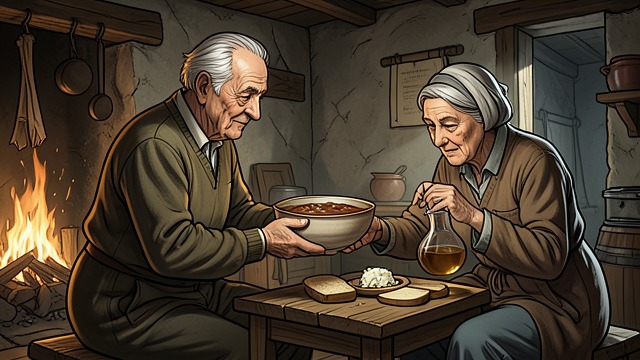
The elderly couple offers food, water, seats, and sincere care despite possessing almost nothing.
Hospitality Rewarded
Their generosity distinguishes them from the surrounding population and earns preservation, a temple, and a shared transformed existence.
The Wandering Gods

The Wandering Gods
A Social Experiment
Jupiter and Mercury travel in disguise, testing whether ordinary people will receive strangers.
A Moral Geography
The locked doors of the wealthy neighbors contrast with the open house of Baucis and Philemon, making ethics visible through architecture.
Perseus’s Welcome

Perseus’s Welcome
A Hero at Court
Cepheus receives Perseus after the rescue and honors him as Andromeda’s protector.
Hospitality Under Threat
Phineus violates the household’s peace by bringing violence into the banquet, turning a sacred social space into a battlefield.
Aeneas Received
Aeneas Received
The Trojan Guest
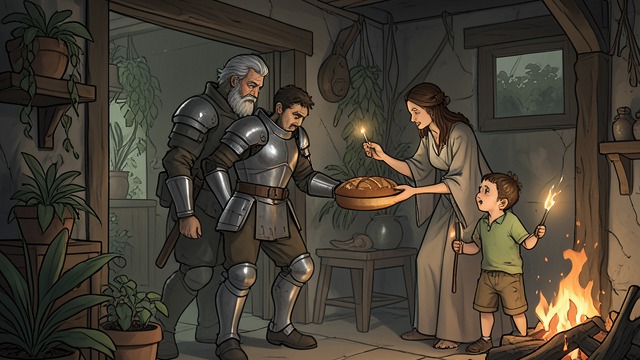
Aeneas is welcomed by Anius after fleeing Troy and receives food, shelter, and gifts.
Continuity Through Generosity
Hospitality allows the displaced hero to carry sacred memory onward, linking local kindness to the survival of a civilization.
before the flood
during the divine visitation
before the flood at Phrygian country
after Andromeda’s rescue
during the exile voyage
